


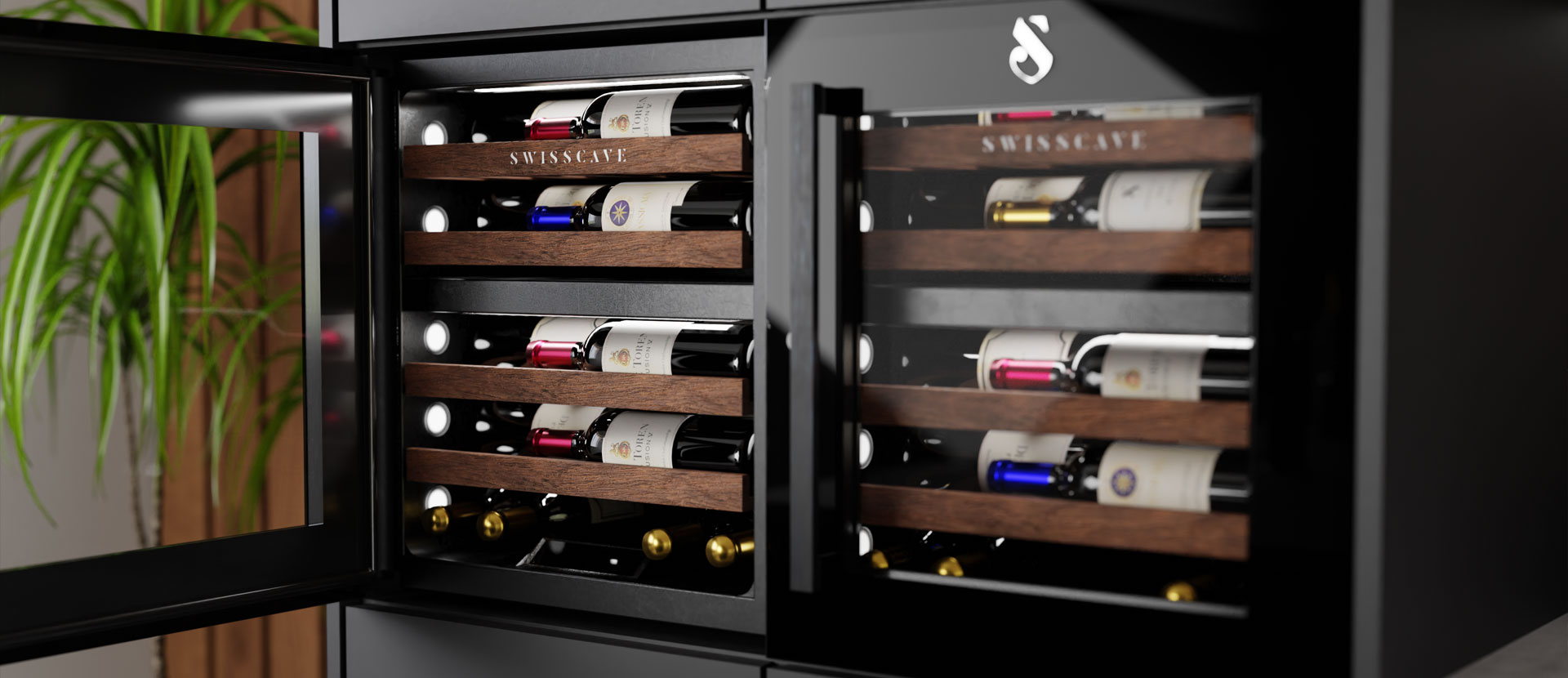
Wine is one of the few consumer goods that can keep developing after bottling. But not every wine automatically improves with age. What matters is its quality, its structure, its vintage, and above all the conditions under which it is stored.
Necessity, luxury, or simply a myth?
Few topics in the world of wine cause as much confusion as the question of whether wine should be drunk young or cellared for years. It's often said that modern wines are made primarily for early consumption, and that most wines available today aren't suited for long-term storage at all.
At the same time, long-term ageing under ideal climatic conditions is widely seen as the precondition for high-quality wines to develop and reach their optimal drinking maturity.
So which is true? To answer that, we first need to clarify what we actually mean by "wine," and why the quality and ageing potential of different wines can differ so significantly.
Many wines are made for early enjoyment. Others only reveal themselves after several years.
Acidity, tannins, extract, origin and vinification determine a wine's ageing potential.
Temperature, humidity, light, vibration and air quality affect every single bottle.
1. Age your wine, or drink it young?
Hardly any other wine topic causes as much uncertainty as whether wine should be stored at all, how this is best done, and when the right moment has come to open a bottle.
It's often said that modern-style wines should mainly be drunk young. It's also frequently claimed that the majority of wines sold today aren't suited to longer storage at all.
On the other hand, the importance of several years of ageing under ideal climatic conditions is regularly emphasized. Only this way, the argument goes, can a high-quality wine develop its full aromatic depth, harmony and optimal drinking maturity.
In fact, both statements can be true. The key point is that not all wine is the same. Some bottles are deliberately made for uncomplicated, early enjoyment. Others have a structure that allows them to develop positively over years, or even decades.
Good to know
A long storage period is not automatically a mark of quality. What matters is whether a wine has enough acidity, tannin, concentration, balance and aromatic depth to keep developing in the bottle.
2. Not all wine is created equal
2.1 More than pressed grape juice
Wine isn't simply pressed and fermented fruit juice. It's the result of a complex interplay of nature, craftsmanship, agricultural work, and deliberately guided biological and chemical processes.
Production methods vary widely: from careful, sustainable processing of high-quality grapes, refined over generations, to heavily industrialized mass production, where price, availability and fast turnover take priority.
In an economy increasingly shaped by large production volumes and short turnover times, many wines are made to be accessible and easy to drink immediately after bottling. The volumes produced are meant to sell quickly, so that as little capital as possible remains tied up in long-term stock.
This economic logic doesn't necessarily conflict with an enjoyable product. But it often leads to a style of wine designed to be uncomplicated, approachable and quickly understood. Such wines are deliberately neither high in tannin nor pronounced in acidity, and aren't meant to need a long development period.
This is comparable to other industrially produced foods: the goal is to create a standardized, instantly recognizable flavor profile. Origin, vintage and individual character take a back seat in the process.
With high-quality wine, it's different. There, the final result isn't shaped by cellar technique and flavor profile alone. Sun, soil, rainfall, wind, altitude, grape variety and the specific terroir all leave a recognizable character.
The winemaker's task, then, is less about artificially constructing a flavor and more about translating the grapes' existing potential into the bottle as precisely and gently as possible.
2.2 Labels, names and origin
The design of a bottle only tells you so much about the quality of its contents. Names, labels and terminology can create an impression of tradition, origin and exclusivity without that translating into any real ageing potential.
In large-volume production, different brands or product lines can emerge from the very same base batch. Through adjusted blends, dosages, ageing methods and packaging, these become wines of different price categories.
An elaborately designed label, a name that sounds steeped in tradition, or the word "Riserva" or "Reserva" on its own is therefore no guarantee of craftsmanship. What matters is who produced the wine, where the grapes came from, and how transparently that origin can be traced.
A simple wine made for early consumption doesn't automatically become more complex through years of storage. Without structure and substance, time alone can't turn it into a great wine.
2.3 Separating the wheat from the chaff
How can you tell a carefully made wine apart from an interchangeable mass-market product? There's no absolutely foolproof rule, but a few pointers can help you judge.
- Visit the winery: If possible, seeing the vineyard, cellar, philosophy and working methods in person gives you a direct impression.
- Read the label carefully: Details on origin, bottler, region and classification often provide valuable clues.
- Research the producer: A quick search can reveal whether a producer farms their own vineyards and how their wines are vinified.
- Ask a specialist retailer: Good wine merchants know their producers and can explain which wines are worth ageing.
- Check the vintage and drinking window: Even an established wine can have very different ageing potential depending on the vintage.
From here on, we'll focus on wines that have enough quality and structure to genuinely benefit from controlled ageing.
3. What actually happens as wine ages?
Unlike many high-proof spirits, wine is not in a fully stable, preserved state. Even after bottling, chemical processes continue inside the bottle.
For this development to happen slowly and in a controlled way, wine needs to be tightly sealed, and stored cool, dark, odor-free and as free from vibration as possible.
One important process during bottle ageing is polymerization, in which smaller molecules link together into larger molecular chains. This affects, among other things, the wine's structure, color and mouthfeel.
A very small amount of oxygen can enable or accelerate these processes. In a properly sealed bottle, oxygen exchange is minimal, but enough for the wine to slowly change over the years.
Tannins
Tannins can bind together and become less angular as a result. With increasing age, wine often becomes softer, rounder and smoother.
Color
Red wines often shift from violet and ruby tones toward garnet, brick or brown hues. White wines can become darker and more golden.
Primary aromas
Fresh fruit and floral aromas partly recede over time, or combine with more complex notes.
Tertiary aromas
Ageing can bring out notes such as leather, tobacco, mushroom, spice, honey, smoke or dried fruit.
Certain aroma compounds change in characteristic ways during ageing. Pyrazines in Cabernet-based wines can evoke green pepper, herbs or gooseberry. Thiols play a role in exotic fruit notes like passion fruit in Sauvignon Blanc. Terpenes in varieties such as Riesling or Gewürztraminer can evoke rose, lychee and other floral aromas.
Barrel ageing in oak or other wood can add further aromas, including vanilla, honey, toast, smoke, coffee or spice. As the wine matures in bottle, these notes ideally integrate more and more with its fruit and structure.
Many carefully made red wines can already improve noticeably after just one to two additional years of ageing. Others need five, ten or more years before reaching their optimal drinking maturity. Many white wines and sparkling wines also have significant ageing potential.
Opened at the right moment, a high-quality wine can reveal a multi-layered interplay of fruit, acidity, structure, mature aromas and length. But if a wine is kept well beyond its optimal drinking window, it slowly starts to decline.
The fruit weakens, the aromas become flatter, and oxidative or metallic notes can appear. Eventually, even a great wine loses its balance and can become undrinkable.
4. The different stages of ageing
An age-worthy wine goes through several stages of development in the bottle. These stages aren't equally pronounced in every wine, and can last different lengths of time depending on grape variety, vintage and storage conditions.
1. Fruit phase
In its youth, a wine often shows fresh, juicy, floral and fruity aromas. Primary fruit dominates, and many wines already deliver great enjoyment at this stage.
2. Closed phase
Some age-worthy wines seem temporarily closed after their early fruit phase. They can come across as tired, flat, angular, bitter or not very expressive.
This phase doesn't necessarily mean the wine is faulty. In international wine language, it's sometimes called the "dumb phase." It can last months, or even several years.
3. Mature phase
In the mature phase, the different aromas gain harmony. Fruit, acidity, tannin, minerality and tertiary ageing aromas increasingly combine into a complex whole.
The optimal drinking window falls within this phase. Depending on the wine, this window can be relatively short, or can extend over many years — for some top wines, even decades.
4. Decline phase
After its peak, a wine slowly begins to lose fruit, freshness and complexity. Oxidative notes increase, structure weakens, and the wine can become increasingly flat or sour.
How do you hit the optimal drinking window?
Hitting a wine's ideal drinking window precisely is something of an art. Since every bottle and every vintage can develop a little differently, it's worth buying several bottles of the same vintage for particularly interesting wines.
With six, or better still twelve, bottles, you can open one at a time at longer intervals and observe how the wine develops. Once you reach the ideal stage, you'll ideally still have several bottles left to enjoy.
- Note the drinking window recommended by the producer, retailer or critic.
- Open a first bottle nearer the beginning of that period.
- Assess fruit, acidity, tannin, balance and aromatic depth.
- Set the next tasting date depending on the wine's stage of development.
- Don't wait unnecessarily long once the wine has already reached its optimal harmony.
5. Which wines are age-worthy, and for how long?
A wine's ageing potential can vary greatly by region, by winery and by product. Even the very same wine can have a markedly different development potential depending on the vintage.
Temperature patterns, rainfall, sun exposure, harvest timing and grape quality all shape the character of a vintage. That's why a blanket storage recommendation for a given wine can only ever serve as a rough guide.
Ideally, buy age-worthy wines from a knowledgeable specialist retailer or directly from the winery. A good wine merchant can not only make recommendations but also explain roughly when a given wine is likely to reach its optimal drinking maturity.
Wine from a specialist retailer doesn't have to be more expensive than wine from a supermarket. Many specialized merchants offer a broad range across price categories and help even beginners discover suitable regions, grape varieties and wine styles.
There's also often the option to taste individual wines before buying. It's well worth visiting a professional wine merchant without hesitation and asking specific questions about ageing potential.
Reputable online retailers frequently list a recommended drinking window as well. Many recognized wine critics also publish assessments of optimal ageing and drinking periods alongside their scores.
It's worth saving this information, or noting it directly in an inventory list. Even so, drinking windows remain estimates. Even experienced experts can't predict a wine's actual development with complete certainty.
Be careful when buying older wines
When buying already-aged wine, its storage history matters a great deal. A wine may originally have had exceptional ageing potential and still have been damaged if it was stored incorrectly over the years.
Before buying older bottles, it's worth trying to establish:
- Where was the wine stored?
- Was it exposed to heat or direct light for extended periods?
- Was humidity adequate?
- Was the bottle moved or transported frequently?
- Can the bottle's provenance be fully traced?
- What is the condition of the fill level, capsule, cork and label?
At auctions in particular, bottles can be offered that have already changed hands or been transported multiple times, with an unclear storage history. If origin and storage can't be traced, caution is warranted.
This risk is lower with young wines bought directly. They've only been on the market for a relatively short time and, thanks to their still-stable structure, are generally less sensitive than already-aged bottles.
Classic regions for age-worthy wines
Numerous regions are known for wines that, with the right winemaking and good vintages, can have considerable ageing potential.
- Bordeaux
- Burgundy
- Champagne
- Piedmont
- Tuscany
- Rioja
- Mosel
- Napa Valley
- Sonoma
- Barossa Valley
Even in these regions, not every wine is automatically suited to long-term ageing. What matters remains the specific producer, vineyard, vinification and vintage.
Rough guide to possible ageing periods
There's no universally valid ageing duration. The table below can only serve as a rough guideline.
| Wine type | Approximate possible ageing period | Key requirement |
|---|---|---|
| Simple, fresh white wines | 1 to 3 years | Freshness and fruit take priority |
| High-quality white wines | 5 to 15 years or longer | Sufficient acidity, concentration and balance |
| Light red wines | 2 to 5 years | Depending on grape variety and producer |
| Structured red wines | 5 to 20 years | Tannin, acidity, concentration and a good vintage |
| Grand cru and top wines | 10 to 30 years or longer | Origin, producer and unbroken storage history |
| High-quality Champagne | 5 to 20 years or longer | Quality, vintage and storage conditions |
| Fortified wines | Several decades | Style, alcohol content and producer |
The periods above are not a guarantee. Some wines develop noticeably faster or slower. What matters most is always the individual bottle and its storage conditions.
6. Storage — but how?
Wine stored in an optimal environment can keep refining itself continuously. Many carefully made wines, even those not intended for decades of ageing, already benefit from six, twelve or twenty-four months of additional rest.
Wine is often opened well before it reaches its optimal maturity, leaving part of its potential enjoyment unused. Measured against the actual experience, more may have been paid for the bottle than the too-early enjoyment reflects.
Anyone without a suitable natural cellar should consider a wine cabinet designed for long-term storage. Keeping a high-quality wine in an unsuitable space can hold back its development.
In the best case, poor conditions simply cause the wine to mature faster or less harmoniously. In the worst case, heat, dryness, light or major temperature swings can permanently damage the bottle.
The key conditions at a glance
A cool, stable temperature range supports slow, controlled ageing.
Bottle temperature should fluctuate as little, and as slowly, as possible.
Balanced humidity helps protect natural corks and labels.
Wine should be kept dark, or behind effectively UV-protected glass.
A calm environment prevents lasting vibration and disturbed sediment.
Strong odors, chemicals and cleaning agents have no place in a storage environment.
Temperature and temperature stability
For long-term wine storage, it's not just the absolute temperature that matters — stability matters even more.
Repeated, rapid fluctuations can cause the wine and the air in the bottle to expand and contract in turn. This puts strain on the closure and can encourage undesirable ageing processes over the long run.
A constant storage temperature in the range of roughly 10 to 14 °C provides good conditions for slow development. Slightly higher or lower values are less of a problem than frequent, abrupt temperature swings.
Humidity
Adequate humidity helps protect natural corks from drying out. If a cork is exposed to very dry air over a long period, it can lose elasticity.
Persistently excessive humidity, on the other hand, can damage labels and packaging or encourage mold growth. A range of roughly 60 to 70 percent offers a sensible compromise for many storage environments.
Light and UV radiation
Wine is sensitive to light, particularly high-energy UV radiation, which can accelerate chemical processes and negatively alter aroma compounds.
Wine should therefore be kept as dark as possible. In wine cabinets with a glass door, effective UV protection is particularly important.
Vibration and shocks
Persistent vibration can stir up sediment and disturb a wine's calm development. Older and unfiltered wines, which naturally develop sediment over time, are especially sensitive.
A high-quality wine cabinet should therefore feature low-vibration components, a quietly mounted compressor and stable shelving.
Odors and air quality
Wine shouldn't be stored for long periods near strong-smelling foods, paints, solvents, cleaning agents or other chemicals.
Controlled air circulation and appropriate filters can help maintain a clean, odor-neutral storage environment.
Lying down or standing up?
Bottles with natural corks are traditionally stored lying down. This keeps the inside of the cork in contact with the wine, which helps preserve its elasticity.
Bottles with screw caps, glass stoppers or synthetic closures can generally also be stored upright. In a wine cabinet, however, storing bottles horizontally is often more space-efficient and easier to organize.
7. Wine cellar or wine cabinet?
A traditional natural cellar can offer excellent conditions for wine, provided temperature, humidity and air quality remain sufficiently stable throughout the year.
Many modern cellars, however, don't meet these requirements. They're heated, heavily insulated, too dry, or subject to large seasonal temperature swings.
In apartments, new buildings and houses without a suitable natural cellar, a wine cabinet is therefore often the more controlled and reliable solution. It creates a defined microclimate that can remain largely stable regardless of location, room temperature and season.
A suitable natural cellar
A good cellar is cool, dark, sufficiently humid, odor-neutral, quiet, and as stable as possible across seasons.
Wine cabinet
A high-quality wine cabinet controls temperature, air circulation, light protection and other key storage factors.
8. Frequently asked questions about wine ageing
Does every wine improve with age?
No. Many wines are deliberately made for early enjoyment. Without enough acidity, tannin, concentration and balance, longer storage can lead to a loss of fruit and freshness.
How do I know if a wine is age-worthy?
Clues come from grape variety, region, producer, vintage, acid structure, tannin level and ageing method. Recommendations from the winery, a specialist retailer or recognized critics can also help.
Can white wine age too?
Yes. High-quality white wines with enough acidity, concentration and structure can age for many years. Well-known examples include certain Rieslings, white Burgundies and high-quality Chardonnays.
What happens if a wine is stored too long?
The wine enters its decline phase. Fruit, freshness and complexity diminish, and oxidative, flat or metallic notes can increasingly dominate.
What temperature is ideal for ageing wine?
A stable range of roughly 10 to 14 °C is often recommended. Long-term stability matters more than hitting one exact temperature.
How much humidity does wine need?
A range of roughly 60 to 70 percent suits many storage environments. Very dry air can stress natural corks, while excessive humidity can damage labels and packaging.
Does wine have to be stored lying down?
Bottles with natural corks are traditionally stored lying down. With screw caps or glass stoppers, this isn't technically necessary.
How many bottles of the same wine should I buy?
For a wine whose development you want to follow, six bottles is a sensible amount. With twelve, you can track the drinking window even more systematically over several years.
Is older wine automatically better?
No. Age alone is not a mark of quality. An aged wine is only better if it had enough substance to begin with and was stored correctly throughout its life.
Conclusion: Good wine ageing takes time and stable conditions
Not every wine needs to be stored for years. Many bottles are made for fresh, direct, early enjoyment. High-quality, well-structured wines, however, can develop significantly through controlled ageing.
Tannins become smoother, primary fruit aromas combine with more complex mature aromas, and the wine gains depth, harmony and expression.
What matters isn't just how long a wine is stored, but above all under what conditions. Constant temperature, suitable humidity, UV protection, low-vibration technology and a clean storage environment form the foundation of successful wine ageing.
Anyone without a suitable natural cellar can use a high-quality wine cabinet to create a controlled microclimate and keep their collection under reliable conditions, independent of season and room temperature.
The right environment for your wine collection
SWISSCAVE develops wine cabinets for controlled, reliable and stylish wine storage — from compact built-in solutions to large-format wine cabinets for serious collections.
Discover SWISSCAVE wine cabinets